


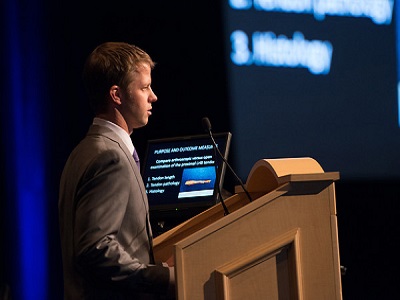
Research and continuing improvement are a critical part of the Mammoth Orthopedic Institute. Our academic interests include generating primary research, participating in multi-center studies, innovating new techniques and technologies, participating in the peer-review process and providing ongoing educational opportunities.
Primary Research
Our areas of interest include anatomic, biomechanical, and clinical studies related to knee and shoulder arthroscopy and total joint arthroplasty and reconstruction. Some recent publications include:
-
Gilmer BB, Crall TS, DeLong J, Takanori K, Mackay G, Jani
Biomechanical Analysis of Anatomic Repair With Internal Bracing for Treatment of Femoral-Sided Avulsion Injuries of the Medial Knee. Orthopedics 2016;39(3):1-6
-
Parisky X, Gilmer BB, Harkins J, Karch M
Periarticular Liposomal Bupivicaine Injection Decreases Length of Stay, Pain Scores, and Opioid Usage After Total Knee Arthroplasty When Compared to Femoral Nerve Block. Progress in Orthopedic Science (under review)
Arthroscopic Techniques
-
Crall TS, Gilmer BB
Anatomic All-Inside Anterior Cruciate Ligament Reconstruction Using Quadriceps Tendon Autograft. Arthroscopy Techniques 2015;x(x):e1-5
-
Gilmer BB, Crall TS, Guttmann D.
Knotless Arthroscopic Repair of Subscapularis Tendon Tears Using Looped Suture. Arthroscopy Techniques. 2015;x(x):e1-e5
-
Lubowitz J, Mackay G, Gilmer BB
Knee medial collateral ligament and posteromedial corner anatomic repair with internal bracing. Arthroscopy Techniques. 2014;3(4):e505-508
-
C Berta, A Nizar, I Hoffman, R Staggers, B Gilmer, A Momaya
Quadriceps Tendon Allograft for ACL Reconstruction With and Without a Bone Block
-
M Podosin, K Hopps, J Goodrum, D Smuin, BB Gilmer
Distal femoral derotational osteotomy for excessive femoral anteversion
-
BB Gilmer, JH Lubowitz
Arthroscopic Management of Tibial Plateau Fractures
-
JD Robinson Jr, T Williamson, T Carson, RJ Whelan, SP Abelow
Primary anterior cruciate ligament repair: Current concepts
-
A Haus, A Chand, K Dawson, S Lang, BB Gilmer, CJ Wahl
Modified Lemaire lateral extra-articular tenodesis using an inlay technique and all-suture knotless anchor fixation
-
T Kelley, J Walthall, K Lyman, SD Lang, BB Gilmer, D Guttmann
“Triple Package” Modified SpeedBridge Rotator Cuff Repair Technique
-
J Ohliger III, A Haus, R Fong, S Lang, BB Gilmer, CJ Wahl
Modified Bosworth technique for medial collateral ligament reconstruction of the knee using semitendinosus tendon autograft
-
ZN Anderson, SD Lang, A Haus, BB Gilmer
Osteochondral Allograft Transplantation Of Posterior Femoral Condyle Lesions Utilizing An Open Posterior Approach To The Knee
-
S O'Neil, S Marvil, H Lakehomer, CC Tipton, J Dobrich, BB Gilmer
Modified technique for arthroscopic bursal acromial reconstruction utilizing acellular dermal allograft
-
CC Tipton, BB Gilmer, S Marvil, S Lang, K Unal, D Guttmann
An arthroscopic technique for release of the middle glenohumeral ligament and the effect on external rotation of the shoulder
-
M Fournier, E Corning, A Witt, S Lang, BB Gilmer
Arthroscopically Assisted Fixation of Terrible Triad Variant Injuries of the Elbow With Small‐Bore Needle Arthroscopy
-
P Neff, DB Franklin III, DL Jones, SD Lang, HR Nadone, BB Gilmer
Transtendinous rotator cuff tear repair with bone marrow aspirate concentrate dermal allograft augmentation
-
M Peters, B Gilmer, HF Kassam
Diagnostic and therapeutic elbow arthroscopy using small-bore needle arthroscopy
-
N Shafi, SD Lang, H Kassam, BB Gilmer
Diagnostic and Therapeutic Shoulder Arthroscopy Using a Small‐Bore Needle Arthroscope
-
R Quinn, SD Lang, BB Gilmer
Diagnostic needle arthroscopy and partial medial meniscectomy using small bore needle arthroscopy
-
BB Gilmer
Editorial Commentary: The Surgeon Is the Method: Be Thoughtful and Methodical When Adopting New Techniques
-
BD Lee, BB Gilmer, SD Lang, D Guttmann
A modified SpeedBridge technique for retracted or delaminated rotator cuff repairs
-
BB Gilmer
Editorial commentary: anterior cruciate ligament tibial eminence avulsion fractures: are they trying to tell us something?
-
BB Gilmer
Double-row suture anchor repair of posterolateral corner avulsion fractures
-
TS Crall, BB Gilmer
Anatomic all-inside anterior cruciate ligament reconstruction using quadriceps tendon autograft
Editorial Commentaries
Gilmer BB. Editorial Commentary: Does Size Matter: Drill Holes in Subpectoral Biceps Tenodesis?
Gilmer BB. Editorial Commentary : When You Have a Hammer, Everything Looks Like a Nail—Tenodesis of a Normal Biceps Tendon at the Time of Arthroscopic Rotator Cuff Repair Should Be Avoided.
Gilmer BB. Editorial Commentary: Goldilocks and the Three Grafts: Managing Tendon Harvest and Graft Length Problems in Autograft Anterior Cruciate Ligament Reconstruction.
Gilmer BB. CORR Insights® : Outcome Selection and Methodological Quality of Major and Minor Shoulder Surgery Studies: A Scoping Review. Clinical Orthopaedics and Related Research®. 2019 Jan 7.
Emerging Technologies
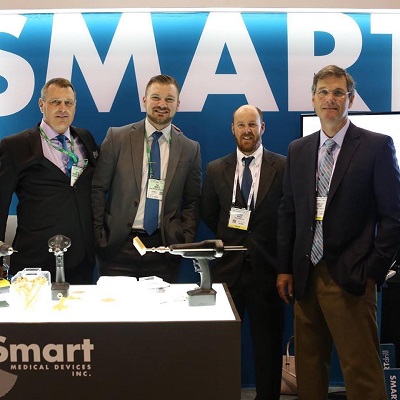
Dr. Karch has been actively designing and developing a novel technology for improving the precision and accuracy of one of the most common skills in Orthopedics: drilling bone. The SMART drill was recently awarded the best technical exhibit award at the AAOS Annual meeting in Orlando. Find more information about SMART drill at www.smartmeddevices.com
National Meetings Presentations
MOI surgeons have been invited to speak at regional and national meetings related to trauma and disaster response, research, arthroscopy, and sports medicine. MOI research, technology, and surgeons have been featured at:
- AANA annual meeting Boston, MA 2016
- Western Trauma Association Mammoth Lakes, 2016
- AAOS annual meeting Orlando, FL 2016
Surgical Outcomes System
Tracking patient outcomes is important to us. We utilize the Surgical Outcomes System (SOS) to track patient related outcomes and continually evaluate and improve our patient care.
Outcomes data is the most common means for evaluating the effectiveness of an intervention. For example, a questionnaire containing a series of questions about pain and function is completed by the patient prior to surgery and then at intervals during the recovery period to see how fast and to what degree the patient improves after surgery. The questions in the questionnaire have been previously studied to be appropriate markers of the variable being evaluated, for example, strength, motion, pain, etc.
The SOS system is an online registry that facilitates obtaining and compiling patient outcomes data. Patient participation is optional. The surveys can be completed on tablets in the office or may be emailed to patients. All data is de-identified and tied to individuals only by a number. The data is then collected and stored online where it can be filtered and sorted to answer clinical questions. More information about the SOS system can be found at: surgicaloutcomesystem.com
Over time, this cumulative data allows MOI to help our surgeons evaluate our techniques and ensure that we are providing the highest quality of care. For individual patients it allows us to better answer your questions about expected recovery and return to function for a given procedure.
Those interested medical students, residents, and fellows are actively encouraged to seek research opportunities. Here at Mammoth Orthopedic Institute, we offer on site and remote opportunities to conduct research and create high quality peer reviewed publications. Please contact us if you are interested. It is not a requirement to be enrolled in a clinical rotation to participate in research projects.