


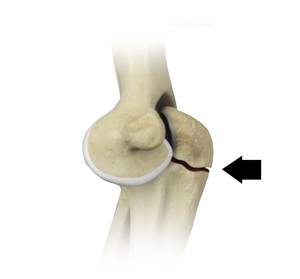
Three bones make up the elbow joint: The humerus, radius and ulna. The bones are held together by ligaments thus providing stability to the joint. Muscles and tendons around the bones coordinate the movements and help in performing various activities. Elbow fractures often occur from a fall on an outstretched arm, a direct blow to the elbow, or an abnormal twist to the joint beyond its functional limit.
Olecranon fractures: These fractures occurre at the bony prominence of the upper ulna. The fractures, if stable, are treated using an immobilizing splint followed by a regimen of motion exercises. However severe fractures require surgical repair.
Symptoms of an olecranon fracture include pain, swelling, bruising, stiffness in and around the elbow, a popping or cracking sound, and deformity of the elbow bones.
To diagnose olecranon fractures X-rays of the joint are taken. In some cases, a CT scan may be needed to get to know the details of the joint surface.
The aim of the treatment is to maximize early motion to reduce the risk of stiffness. Nonsurgical treatment options include use of a splint or a sling to immobilize the elbow during the healing process. Surgery is indicated in displaced and open fractures to realign the bones and stabilize the joint as well as to avoid deep infections. Strengthening exercises, scar massage, therapy with ultrasound, heat, and ice are recommended to improve the range of motion. Splints are also used to facilitate stretching of the joint.
For more information about our services or to schedule an appointment, call us at / / or click here to request an appointment online. We’ll respond to you as soon as possible.